12 October 2006

The magic of Marrakesh

We've been back for around two weeks now, and Morocco is still as fresh in my mind as the smell of just-squeezed orange juice served in the sprawling main square of Marrakesh.

I can't get the country - that city, specifically - out of my head.

I was sitting at work last Friday, about 4 o'clock Portland time, watching the rims fill up and knowing a long night was ahead of me. My mind drifted back to Jemaa el Fna, where it was 11 o'clock.

I imagined Amy and I, sitting at the cafe we'd visited days ago, perched on a raised patio overlooking that giant square, sharing a bottle of wine we'd managed to scare up from a friend with connections. Ordering on paper because the waiter speaks French and we know nothing beyond "Oui." Watching the blur of humanity drift back and forth in every direction at once. Listening to the buzz of thousands of voices, picking up bits of conversations left and right in the late-night, fast-breaking revelry of Ramadan. Arabic here. Berber and French there. Some Spanish and German in that direction. Tidbits of Dutch behind us. And, at our little table for two, laughing as we realize we are inadvertently bouncing from English to Spanish to the little bit of Arabic we know.


Then later, warmed by each other and the wine as the desert air cools, we stroll through the square itself, people-watching up close. So close you brush shoulders, smell new aftershaves and catch flashes of eye color deep in the throng. Surrounded by people in every direction, alive and full of life, as midnight nears. The snake charmers and fortune tellers, just waiting to spin their magic, it seems, directly into your soul. The restaurant barkers, the call of their voices no match for the aroma of their food, but both working to lure you to their table for another in an endless menu of dishes whose spices are sure to dance on your unfamiliar tongue. The musicians, their rhythms rolling out of the drums and pinging off the banjo strings, washing across the onlookers and working into our ears, flipping some switch in our brains and involuntarily setting some part, any part, of our bodies into motion -- hips swinging here, a head nodding there, maybe just a toe tap, tap, tapping halfway around the world from all you knew before.


Now, back here, I find myself reading all sorts of pieces about the place I just visited. Stuff I'm sure must have run all the time before, but stuff I never noticed.

Maybe it's my little attempt to keep a piece of the Moroccan spirit present in me today rather than tucked away as a memory to be recalled in some distant tomorrow.

Here's a great quote from one such piece, a profile of Spanish expatriate novelist Juan Goytisolo, from The New York Times Magazine:

"People ask, 'Why do you live in Marrakesh?'" Goytisolo told me with a chuckle. "I ask them, 'Have you seen it?'" In Jemaa el Fna, Goytisolo explained, he finds all the heterogeneity that is in danger of disappearing from Western cities. "In the '70s, when I was very poor, I was offered a permanent teaching post in Edmonton. I realized I would rather starve in Marrakesh than be a millionaire in Alberta."
So as all the pressures, the demands of work, the stresses of life try to creep back into my brain, here's hoping that Moroccan mojo helps fend them off and keeps me balanced in ways I wasn't before the trip.

Perspective, I suppose, is everything. And my view from Marrakesh is mesmerizing.

09 October 2006

Slideshow: Third time's the charm... I hope

Well, damnit.

I can't get the slideshow to embed in a posting. Worse still, for some reason Blogger's not letting me delete the two bogus attempts to embed it.

So for now, you'll have to go view it on the Flickr site where I built it:

Morocco '06 slideshow

(Thanks to Quentin for the great tip on batch-processing the photos to resize them for the Web. Saved a ton of time.)

To repeat, here's some notes for your guided tour:

The 150 pictures - we edited down from 700-plus, I swear! - run in this sequence:

1. Casablanca
Scenes from Hassan II Mosque

2. Rabat
Begins with a bureaucratic-looking building

3. Children from around the country
Awwwww...

4. Chefchaouen
Begins with landscape shot of this town, famed for its blue-washed walls, in the mountains

5. Volubilis, Meknes and Fez
Begins with the ruins of Volubilis, then on to the gate and market of Meknes and then to the skyline view of the overwhelming, ancient and mosaic-filled Fez

6. On the road
If only I could pair this up with a good travelin' song

7. Sahara and the south
Starts with Amy at an oasis, followed by me playing in the world's largest sandbox

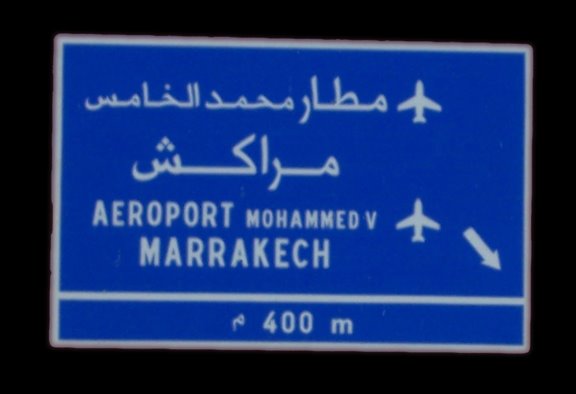
8. Marrakesh
The sign makes clear you've arrived at our favorite city

9. Essaouria and Casablanca
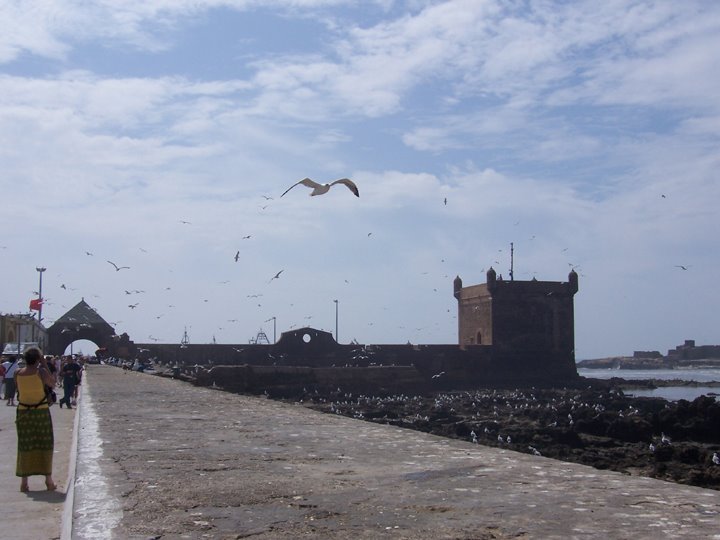
The gulls at the coast swarm Essaouria's "Castles Made of Sand," then it's back the Casablanca for one last night before flying home.

You can set the display time between 1 and 10 seconds, to take as long (our family) or as little (everyone else) as you'd like with each image.

Enjoy.

02 October 2006

Day 1, cont.: Rabat

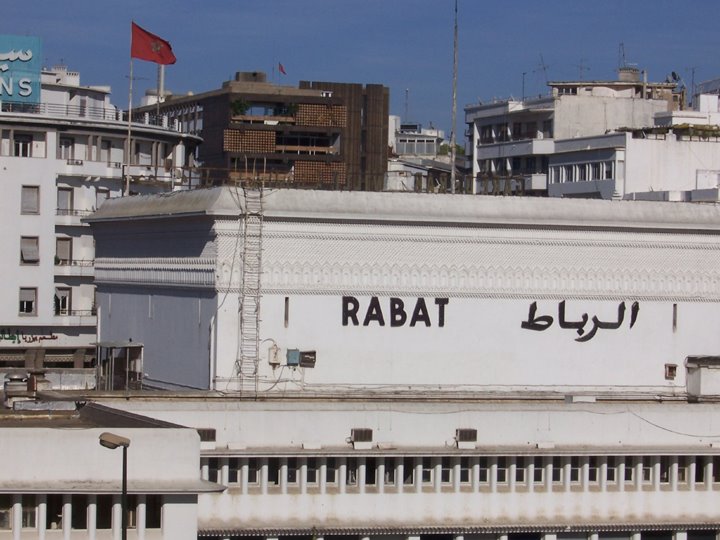
After visiting the Hassan II Mosque, we drove about an hour north to Rabat. With around 1 million people, it's considerably smaller than Casablanca. And being the nation's capital, the city has a certain bureaucratic feel to broad swaths of its newer streets and architecture.


Here was our introduction to something we'd see across Morocco: Ville nouvelle versus medina. Or, more simply, new city versus old city. Each town's original core - the medina - is like a city unto itself, often nestled behind the walls that centuries ago offered protection. Crossing those walls, we learned, was like stepping into a different world.


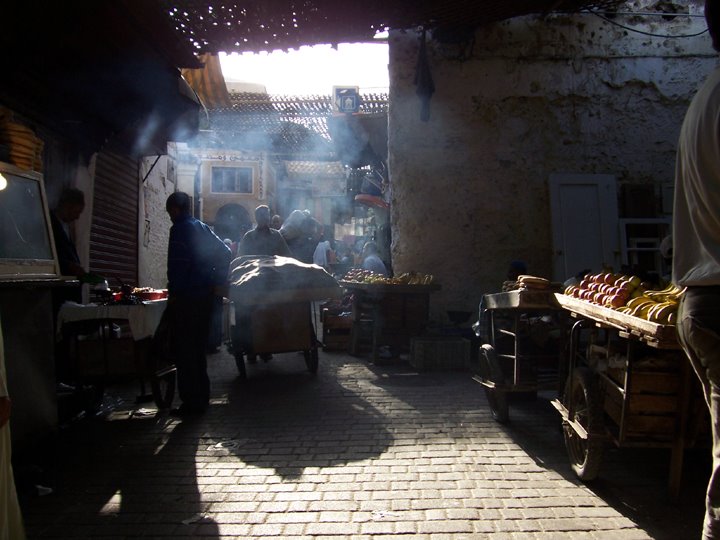
The streets inside the old cities are narrower, more congested, but not with cars. Instead, people are everywhere on foot and on bike. Horses, donkeys and people haul all sizes of two-wheeled carts. Everything seems to be in a constant state of motion. There's no block-by-block grid. And the buildings, if not actually tying on to the ones adjacent to it, look as though they could slouch against one another for support if too exhausted to stand fully erect after centuries of use.


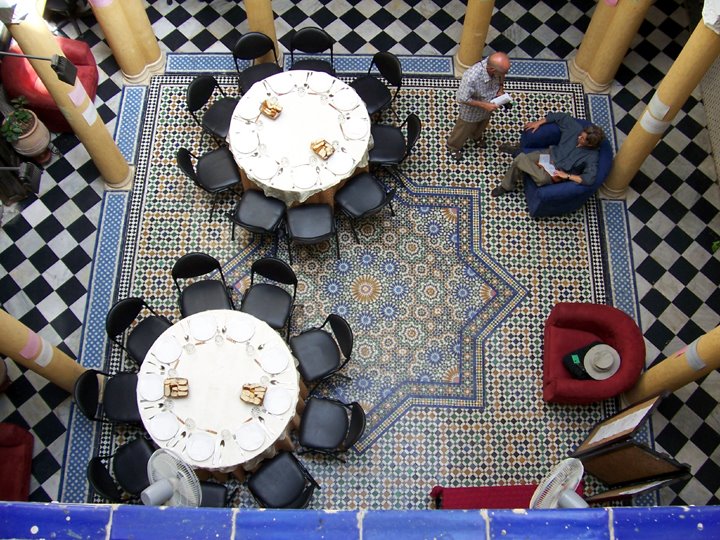
Although nondescript from the street, the buildings were generally astonishing on the interior, as we observed at our lunch stop, the Center for Cross-Cultural Learning. Our guide compared it, in a sense, to the princple of the veil many Arab women wear. The outside world sees little of the wonders within.


After filling our stomachs and resting a bit, we heard a presentation on Islam that gave us a good base of knowledge for the rest of the trip. We were fading fast after so much travel and so little sleep. So soon the group headed to the first hotel, got cleaned up for dinner and got to sleep.

Day 1, cont.: Casablanca


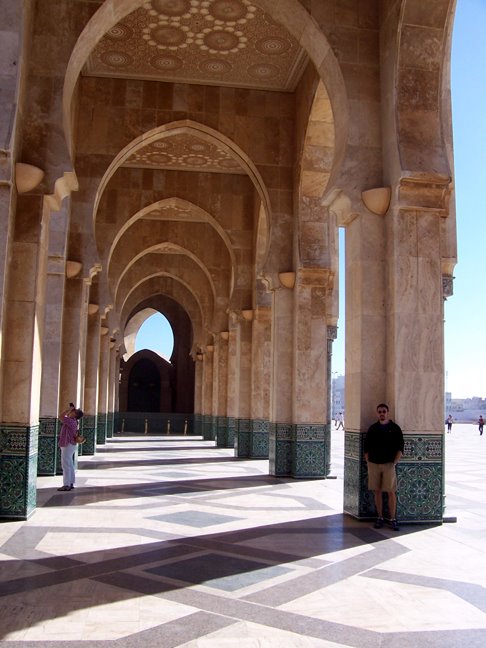
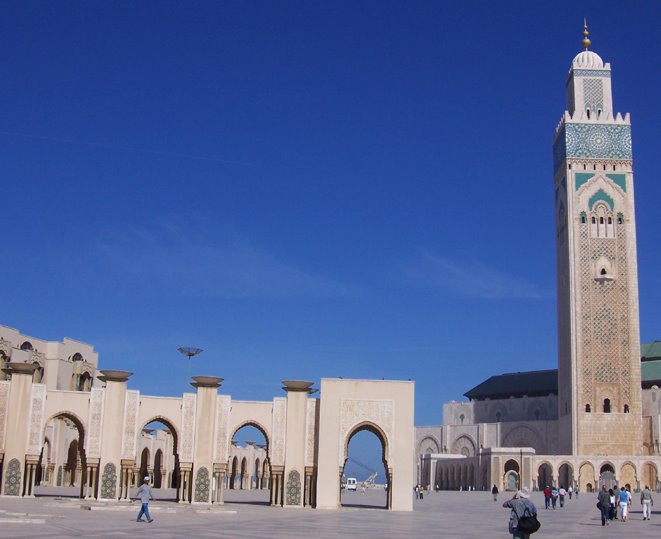
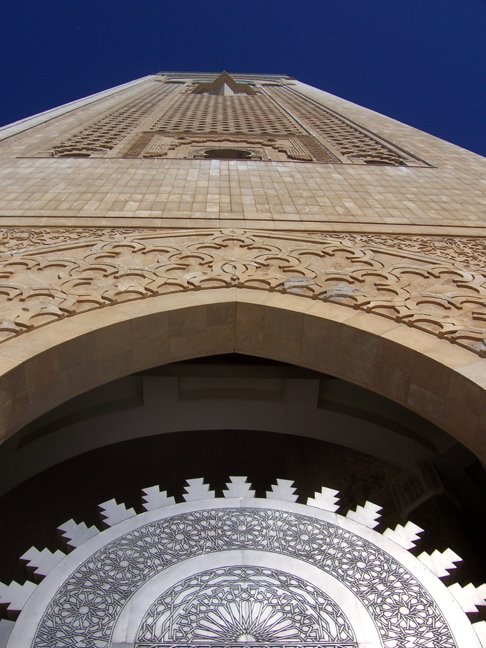
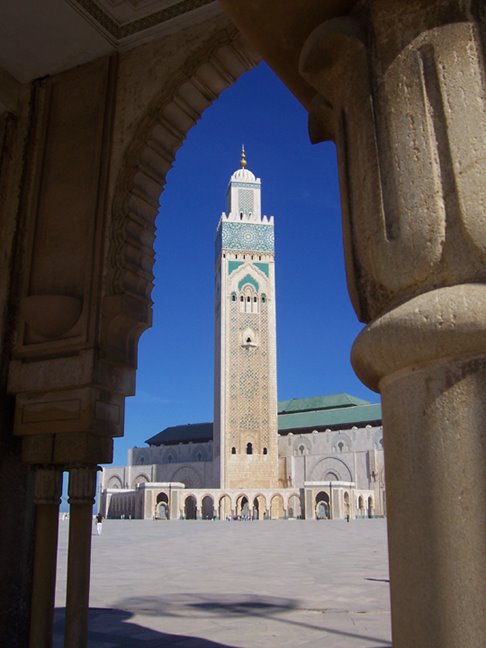
We hit the ground running, heading from the airport directly to the Hassan II Mosque, whose 689-foot minaret is the world's tallest.

The site is considered the apex of North African Islamic architecture.

Overlooking the Atlantic Ocean and named for the former king, the site was built between 1986-1993 with money raised by public subscription.

It made for a stunning introduction to the Muslim world, spinning into a discussion of the principles of Islam and the importance of mosques in the layout of cities.

01 October 2006

Day 1: Portland to Casablanca

From Seth's notebook:

The sun has just risen before us - filling the cabin with a pink-to-orange-to-red glow at 30,000 feet - minutes before we're to land in Morocco.

What a welcome to Africa. And what a way to shake off the groginess from 24 hours of travel. We left our doorstep at 3:40 a.m. Saturday, lifted off the ground at PDX at 6:10 and now are about to touch down in Casablanca around 7 a.m. the next day. It's sure to be a whole new world to us.

I've been reading the 9/11 issue of The New Yorker on and off during the trans-Atlantic flight. We've heard a lot of subtle and not-so-subtle concerns from people about this vacation. And the international terminal of JFK might well have been the most diverse place this Oklahoma kid's been until, well, a few more minutes from now. I've started into a timely article by George Packer, who is also from Oklahoma if I remember right. It includes this passage to bear in mind as we start this trip:

"Islamism has taken on the frightening and faceless aspect of the masked jihadi, the full-length veil, the religious militia, the blurred figure in a security video, the messianic head of state, the anti-American mob. At Islam's core, in the countries of the Middle East from Egypt to Iran, tajdid and islah (revivial and reform) have helped push societies toward extremes of fervor, repression and violence.

But on the periphery, from Senegal to Indonesia - where the vast majority of Muslims live - Islamic reform comes in more varieties than most Westerners imagine. At the edges, the influence of American policy and the Israeli-Palestinian siege is less overwhelming; and it is easier to see that the real drama in Islam is the essential dilemma addressed by (Mahmoud Muhammed) Taha [whom the article is about]: how to revive ancient sacred texts in a way that allows one to live in a modern world."
Judging from what I've seen so far -- from the adorable boy wearing a "soccer champ" shirt sitting with his mother and grandmother, both with heads covered and wearing full-length jalabas, or the woman in the flowing sunny yellow robes and head scarf complete with the Georgia Tech logo - I have to agree.

Here's to the beginning of what's sure to be an amazing and eye-opening two weeks, for us and others, I hope.

Meet our guides and driver:

MOUDEN ABDESLAM
A childhood friend of Abdul's from Chefchaouen, we call him Abdeslam. He is president of a professional guide association in Chefchaouen, where he still lives. In his late 30s, he's married with one child, a son. He speaks Arabic, Berber, Spanish, French, English, for starters.


ABDELMOUGHIG AKDI
Our friend in Vancouver, the inspiration behind this trip, goes by Abdul. He owns the Mint Tea import store in our neighborhood with his wife, Jenna. In his late 30s, he's married with one child, a son. He speaks Arabic, French, English, and maybe a little Berber and Spanish.


OMAR
A friend of Abdeslam's who lives in Tangier, he is our driver for the trip. Abdeslam wanted him, in particular, behind the wheel after working with him in the past. He's married with one child, a son, whom we'll meet along the way. He speaks Arabic and French, and a little Spanish.

30 September 2006

Morocco: We're back

We're back. We're tired. And we're so happy we went.

We'll write about the trip and post more pictures in the days and weeks to come. For now, however, here are some of our favorite pictures from the two-week trip.


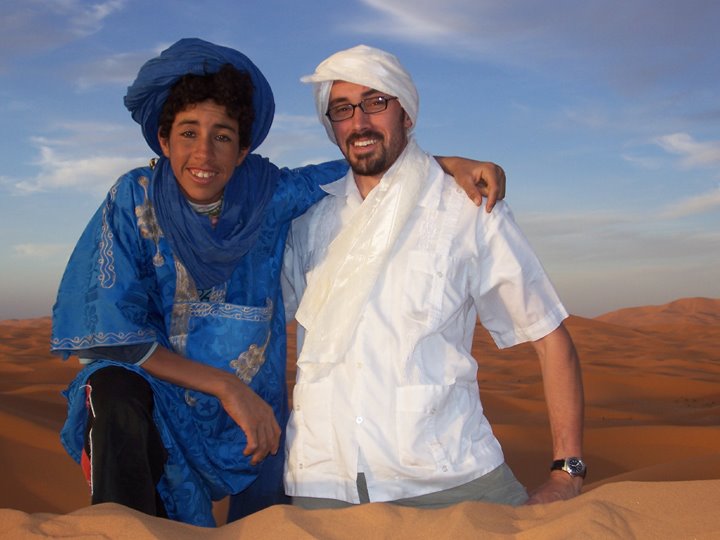
Sunset in the Sahara

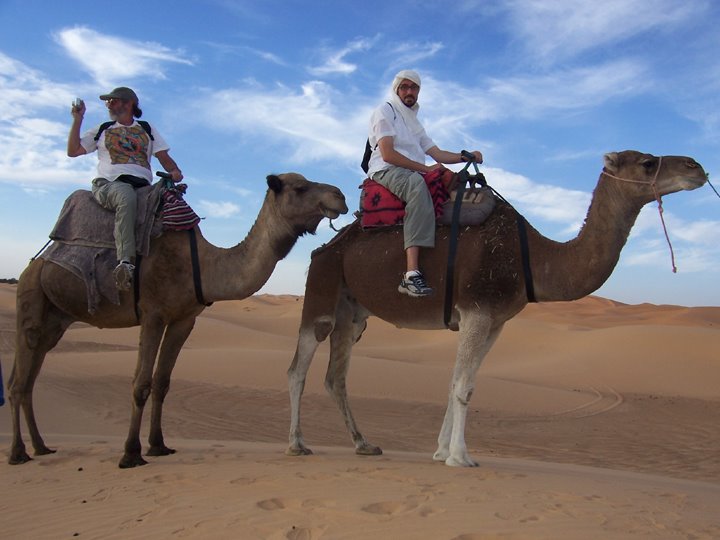
Giddyup.

Befriending the blue men guides.

Cooking on Marrakech's main square.

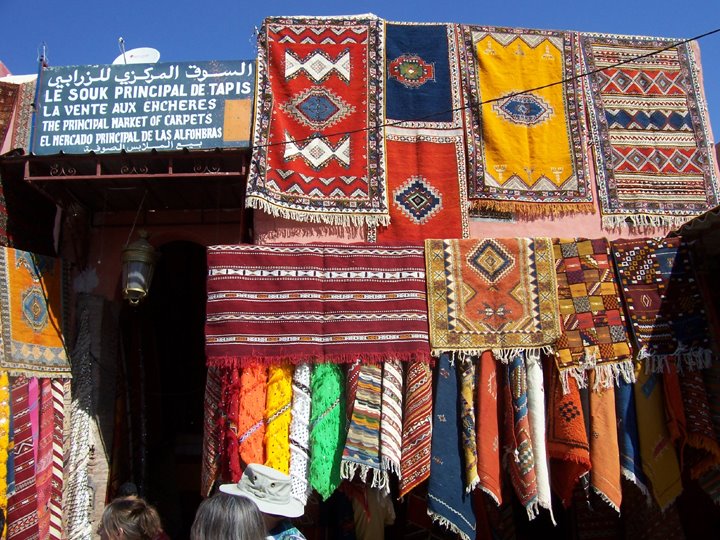
Rugs in Marrakech.

Tanning Fes' hides.

Cooking in the souqs of Fes.

Fes mosaic in detail.

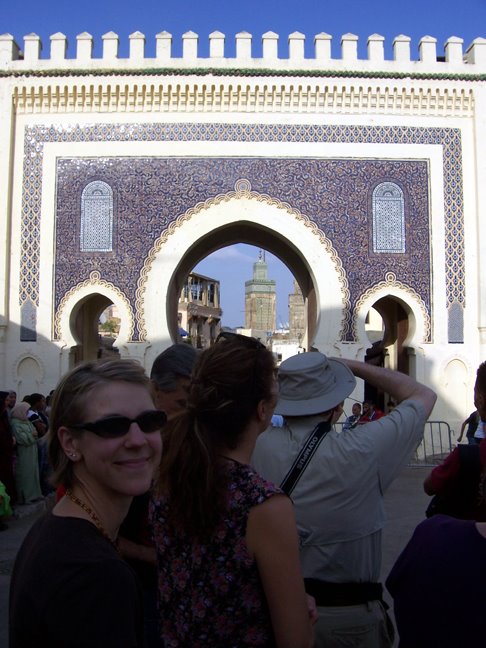
One of Fes' main gates.

The markets - olive, anyone? - of Meknes.

Essaouria, which inspired Jimi Hendrix's "Castles Made of Sand."

Ordering lunch at a roadside cafe.

On the way to class.

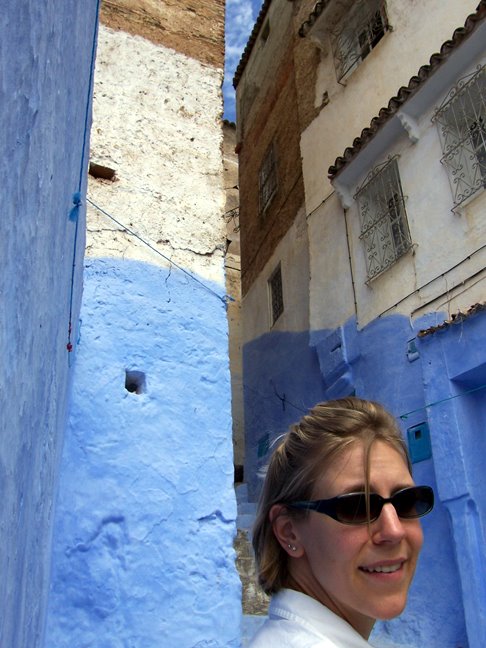
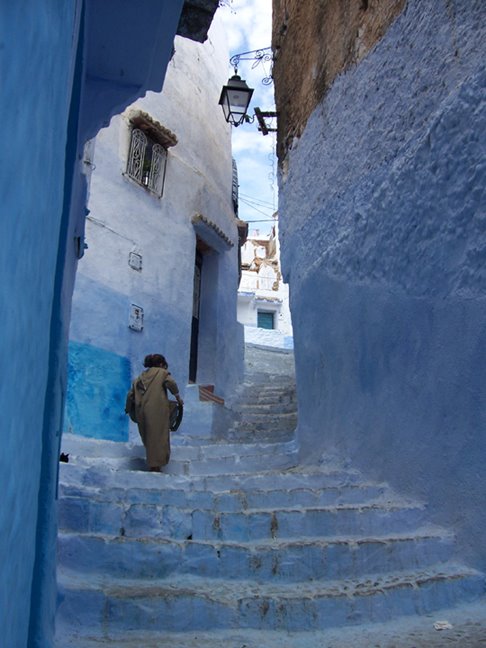
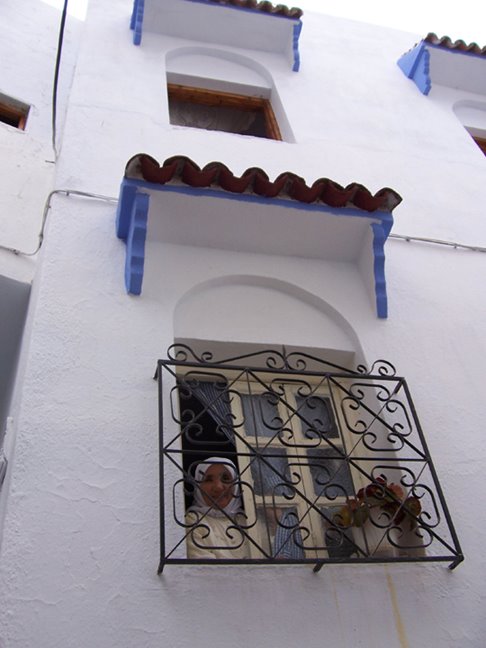
The streets of Chefchaouen.

More from Chefchaouen.

Abdul's mom says goodbye from the family home in Chefchaouen.

Where do you insert the pump?

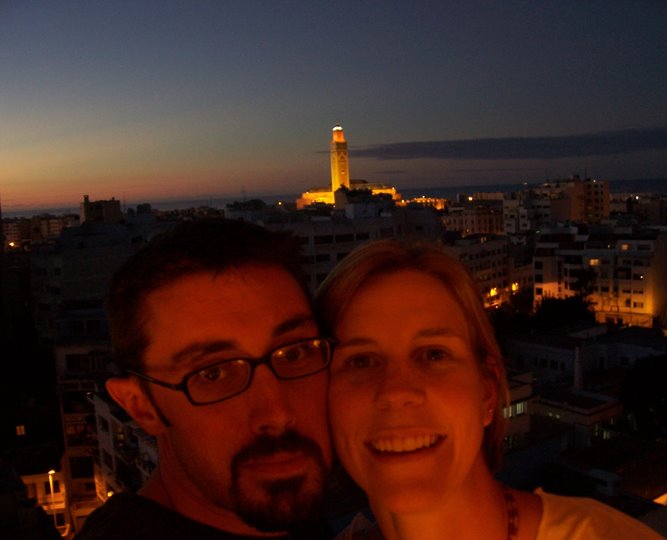
Forget Paris. We'll always have Casablanca.

26 September 2006

marrakech day 2

day 2 in marrakech began with a tour of the souq - the maze-like market in the sprawling medina

saw everything from metalwork to ceramics to carpets to all varieties of animals - from beasts of burden hauling massive loads of goods to critters or parts of them bound for a plate somewhere for dinner in town tonight

plus we got to meet many friends of abduls

then broke off from the group for a nice lunch and people watching in the giant main square

then amy and i went to a private hammam -- a spa-like place where we had two-plus hours of steamrooms, scrubbings and massages

ahhhhh

we feel like jello

now we are hanging out at the riad before dinner

tomorroiw we drive to the coast and essouria

25 September 2006

marrakech

we are now in marrakech
arrived here after a few days in the sahara, where we battled through some food poisoning but now we are well
had a beautiful drive through the high atlas mountains
whew
they take those curves fast
staying at another beautiful riad, a bed and breakfast type place tucked away in the bustling medina
tomorrow we are off for some more shopping in this city that has the largest market in all of africa
seth got his drum
also got a clean shave with a straight edge razor for 2.50 usd
watched drumming, snake charmers and monkeys in the square
on wednesday we head to the coast for a day on the beach
still having a great time as we near the end of the trip
cannot wait to share photos and stories
take care

18 September 2006

Technical difficulties

The keyboards here are nuts. Because of that - and the fact we would rather go see more of Chefchaouen than the interior of one of its cybercafes, we am giving up hope of long-form blogging during this trip.

We are both keeping detailed journals, however, and will post from those upon returning.

The trip so far is better than we ever imagined. And we have great pictures, too.

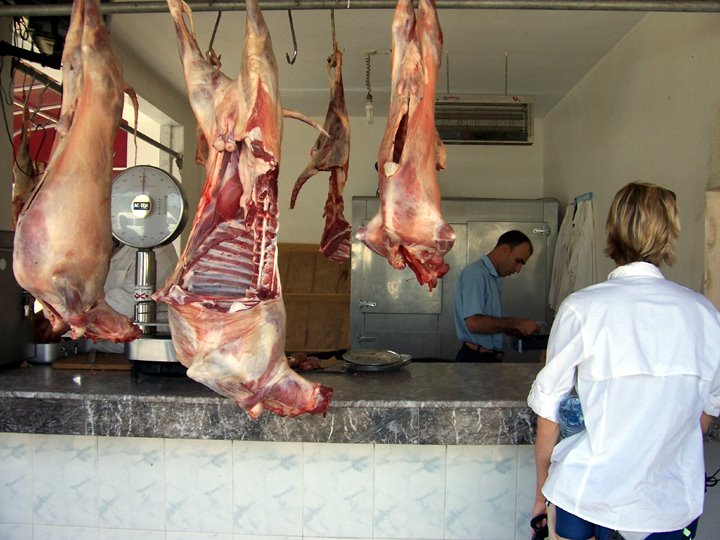
The food has been amazing such as the lamb we had today where we watched the butcher cut it up. We are having lots of fun and feel safe. Our guides are great.

That is all from here for now. We are off to dinner.


14 September 2006

Packin'

In order to pack light, I have now made three trips to Target, two trips to Columbia, two trips to REI, two trips to GI Joes, a trip to Walgreens and a trip to Safeway.

I've searched the pharmacy shelves and shoes stores for just the right medicine, shoes, and dozens of other American staples.

The absurdity of all of my shopping hit me as I spent time sighing in the aisles. I was looking for a gift to take to Abdul's parents, who will host us for a dinner in his hometown in Morocco. The typical hostess gift -- a bottle of wine, flowers, a candle -- seemed inappropriate or downright impractical.

So, I called Abdul's wife, Jenna, and asked her for a suggestion. She paused for a second, thinking.

"Socks," she said. "Something nice and warm. It's about to get cold there, and they have cement floors. Oh, and some nice smelling soap. They only sell two kinds of soap there, and one's this paste, it's yuck."

Socks and soaps. She went on to tell me that any gently-used piece of clothing would be nice to hand off to Abdul's sister.

Socks, soaps and old sweaters.

I suspect that if I showed up at an American's house with such practical gifts, I'd either make a great story for the hostess' next cocktail party, or I'd be made to feel sheepish as the socks sat on a bar next to Pinot Noir and brie. I can just imagine myself saying, "I just thought this sweater would fit you, and I'm kinda tired of it after three winters."

I expect I would be treated wonderfully with gift or no gift in the home of Abdul's parents. It's amazing, though, that socks and soaps could foster such a beautiful relationship with otherwise strangers.

I cannot wait to share a meal with them. Bowls full of food, glasses steaming with tea and baskets full of bread. And the socks and soap.
-Amy

11 September 2006

9/11

At work, as today's fifth anniversary of the 9/11 attacks has drawn near, we've had plenty of stories about what's changed, what hasn't and what it all means.

Maybe I'm not engaged enough. Maybe I have war-on-terror exhaustion. Maybe being in Oklahoma at the time of the Murrah bombing makes 9/11 feel a little like someone else's tragedy. Maybe I hit the five-year benchmark for the OKC tragedy and realized it was just like the fourth anniversary and the sixth anniversary.

I'm not sure, but at some point, the coverage all blurs into a giant gray mass. And for me, that point had hit Saturday night as I grabbed a seat on the MAX after wrapping up another shift. I'd absorbed all I could on the subject.

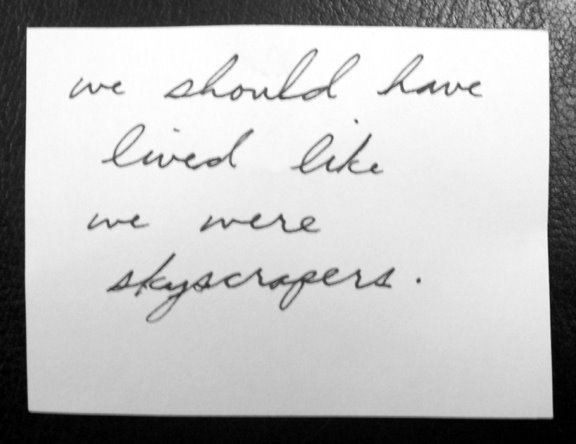
Then, in the sliver of space between the wall and the seat in front of me, I saw this slip of paper:


A fitting thought for today, no?

This being Portland, it is probably someone's public art project. But however that note got there, and whatever led me to pick that seat, on that train, and to look down in that space and see it at that time, well, I'll take it.

Because, in a way, that sentiment slices through the talking heads, the politics, the madness of it all like little else. In this crazed world, we have to savor those little moments of clarity and beauty whenever and wherever they arise, be it in Oklahoma, Portland, or, next week, Morocco.

Being an editor, though, I'd suggest the present tense:

"We should live like we are skyscrapers."

05 September 2006

15 minutes of fame

Our friends Juliana and Claire run a great new coffee/crepe shop around the corner. And at this shop, which is called Mon Ami, they have Portland's most outstanding coffee, Stumptown. And I mean "coffee" in the same way we Southerners say "Coke" when we want a Dr Pepper.

I don't drink coffee. I drink chai, which is a tea. And no matter what my friend Ellen in Denver says, it does not taste like feet. And I prefer not to think about what basis of knowledge she'd have for such a statement.

Anyhow, a local filmmaker has been at Mon Ami lately, starting work on his next documentary, which is about coffee and has the working title "Burnt Chocolate Water." Well, Amy was writing about him recently, and I went down on a Saturday morning after her interviews finished to meet her for breakfast and hangout for a bit at the neighborhood shop.

The guy was still filming and I ended up being interviewed. He now has a working trailer up for the project, and it turns out my dumb ass ended up making the cut. Next stop: Oscars.

Check it, and a link to Amy's article, out here.

23 August 2006

Why can't all interviews be this much fun?

Florida Congressman Robert Wexler on "The Colbert Report"

21 August 2006

Morocco itinerary, cont.

I knew this was going to be one long haul, but I hadn't run the numbers until today. From doorstep to doorstep, we're scheduled to travel 14,041.5 miles by plane and car. That's like traveling from Portland to Oklahoma City and back nearly five times. Minus a brief camel excursion, all our travel in Morocco will be via auto. And thankfully, we won't be doing any of the driving.

I've also updated the itinerary map with more specific day-by-day information so relatives, if they're so inclined, can easily pinpoint just where we'll be and when we'll be there.

Morocco itinerary

For curious family and friends:
The where and when behind the "How-can-we-not?" trip.

14 August 2006

Fear and vaccinations

"We will end up boarding our flights
barefoot, barehanded and buck naked

except for a hospital gown
they'll make us put on at the airport."
-- Eugene Robinson, columnist
Washington Post, Aug. 11

That, I expect at this point. But little did I know that we would go through something similar to get the green-light from our doctors.

We leave for Morocco in just about one month. So we called Kaiser's international travel clinic to see what, if anything, we would be wise to do before leaving. Turns out the more appropriate question would have been, "What, dear needle-weilding clinician, must you do to me before I go."

After running through a 20-minute phone conversation about any place we'll be sleeping, our dietary habits, medical histories and so on, they worked up a three-page list of recommendations.

Now, really, it's not that I'm ungrateful. And perhaps my views on all this are more colored by the fact I've never done much international travel. But part of me wonders what we Americans -- with our cushy lives, our nothing-is-safe political climate, our genetically engineered food and our general science-as-cure-all culture -- have gotten our bodies and brains into.

Before people from other countries come to visit the States, do their doctors run them through hoops like this? Or is it just when Americans venture beyond their borders that it's like a panic-stricken Desmond fearfully stepping through the hatch door marked QUARANTINE on "Lost"?

To take it a step further, does a litany of shots such as this, which we both got this morning -- Hepatitis A; measles, mumps, rubella; polio; tetanus, diphtheria, pertussis -- contribute in any small way to increasing isolationism?

If so, and I fear it might, I think that's tremendously sad.

Of course, this is predicated on the aforementioned cushy American life, which affords us the means to do a little exploring. And I understand that some folks either aren't able or interested in traveling much. But there are others who might say the poking and prodding just isn't worth the trouble. And there are still others who might see it like going into some wild, unsafe, unimaginable netherworld.

That I don't understand.

It's only by getting out of our comfort zones, by seeing new people and places and cultures, that we'll really get to better understand the world and what -- no matter what we hear or read or take on faith -- is our very little place in it.

So with that in mind, later today I'll dutifully go pick up our travel meds -- the ciprofloxacin, the ioperamide, the oral rehydration salts and the vivotif berna -- whatever all that is, and we'll be one step further down the path of this adventure.

One that, despite any gastrointestinal or more severe inconveniences, will be worth every moment and penny of it when we're sleeping under the stars in the desert, or playing the drums in the casbah, or sharing a meal in the home of a friend's family high in the Rif Mountains and a world away from all we once knew.

11 August 2006

Put 'em on notice

It's Friday. Everyone's edgy. Enough's enough.

Just like Stephen Colbert, put all that irritates you on notice.

My list:
1. War on terror
2. The WB network
3. Brussel sprouts
4. Rhett Bomar
5. Workplace gossip
6. Jerky neighbors
7. Bruce Sussman's hair
8. End of summer

05 August 2006

Shame of the Sooners

A definition, with apologies to Webster's, as applied to this week's news out of Norman:

A how-to on throwing it away.

Word: selfish
Pronunciation: Rhett Bomar
Function: waste
1 : concerned excessively or exclusively with oneself : seeking or concentrating on one's own advantage, pleasure, or well-being without regard for others
2 : arising from concern with one's own welfare or advantage in disregard of others.
See also: dipshit

I think the young Mr. Bomar would wisely disappear from Norman, and better yet be across state lines, by the season opener.

03 August 2006

Earthquake

We had a little earthquake last night. Another of those moments when I'm reminded we aren't living in the Midwest anymore.

At 1:39 a.m., I was just about to go to bed after working the late shift at work. The Colbert Report replay was on and I was laughing about something. Then I thought, wait a minute, I'm not laughing hard enough for the cabinet door to be quivering. But then I noticed the bed seemed to be rattling ever so slightly, too. I looked around and listened to see whether a big truck might be rumbling down Columbia Street or something. There wasn't. And then it was over.

I didn't think anything of it and went on to bed.

Got up this morning and checked the Web like usual. An e-mail on my work account said something about a quake. Turns out it was centered about 15 miles north of our house. The USGS is calling it a 3.8, which is minor. No reports of damage or injuries.

02 August 2006

Demise of card collecting

Slate has a good piece up today that reminded me of childhood: Requiem for a rookie card.

"If I had to guess, I'd say that I spent a couple thousand bucks and a couple thousand hours compiling my baseball card collection," Dave Jamieson writes. "Now, it appears to have a street value of approximately zero dollars. What happened?"

Well, shit. There went the McPrince children college fund.

Still, all those cards in my parents' attic are mine. And the memories I associate with them are worth more to me than whatever a Robin Ventura rookie might have brought in.

Maybe it's one of the flaws of our out-of-control capitalistic society. When everything (even, say, cheap cardboard images of men playing a game that are mass-produced for children's enjoyment) has a price tag slapped on it, at some point, you have to ask what things are really worth. The value of baseball cards, at their core at least, was the thrill of opening the pack, hunting down your favorite players' cards and trading them with buddies.

Like so many things, it was fun while it lasted. And damn the corporate schmucks who overinflated the card-producing industry like batting averages balloon against expansion-year pitching.

I begrudingly take this, and the fact that I find myself writing a post on the subject, as further evidence of one undeniable fact: I'm getting old.

Sigh.